Hey everyone, welcome to my recipe page, If you're looking for recipes idea to cook today, look no further! We provide you only the best Buckwheat Sourdough Starter recipe here. We also have wide variety of recipes to try.
Before you jump to Buckwheat Sourdough Starter recipe, you may want to read this short interesting healthy tips about {The Basics of Being Healthy. Becoming A Healthy Eater
Camp cooking can be as elaborate or simple as you would like it to be. If you wish to prepare quick and simple but nutritious meals while you’re swimming, camp cooking does not even have to need a flame. But if you’re thinking about ridding your camping excursion having a feast, camp cooking can make it possible for you to earn hot, healthy foods which are as great as you can create them at home in your kitchen.
Camp cooking does not need to be limited to sandwiches and baked potatoes wrapped in aluminum foil. Almost any cooking procedure you use from the kitchen could be replicated around the home. For example, use a dutch oven or pit cooking to bake your food. You may also easily fry foods in a pan over a grill, or boil, braise and beverage. What kind of camping cookware is ideal for you? Camp cooking and clean-up can be easy or a hassle, it all starts with great camping gear.
Some pots/pans arrive in sets that mate together or"nest" for storage and even let you tuck a spoonful of gas within them. This really also comes in handy when you’re trying to save space whilst camping.
Listed below are some camping items to consider with you if you’re planning on preparing some meals around the home. These common kitchen items allow you to duplicate tasty meals while you’re out of doors.
• Other your favourite herbs and spices • Cooking oil • Pot holder • Hand-held can opener • Aluminum foil
• Cutting knives • Cutting board • Mixing bowl
When you have only a couple of campers and are searching for some simple camp cooking, try the easy and fast technique of tin may cooking. All you’ll need is a clean tin can – a 1 gallon size may works well. Your source of heat can be a small campfire, or when wood burning is illegal, a small buddy burner will work well, which may be located at sporting good stores or online. Place your meal in the tin can and easily heat the contents of your own can over a flame. This technique works great for soups, beans and poultry.
A more time-consuming pub cooking technique that also produces yummy meals is pit cooking. Pit cooking is good for items that may be wrapped in aluminum foil to be cooked. It’s also a excellent camp cooking method if you are using a dutch oven or cast iron cookware. Pit cooking calms your food by heating rocks and coals that are concealed in the ground. As the stones cool away, their emitted heat cooks the food. To pit cookfirst dig a hole that is roughly three times bigger than your own cookware. Line the pit with stones and construct a fire in the middle. Once the fire has burned rapidly for about one hourpush the warm coals and rocks into the center. Twist your wrapped food or covered skillets on top of the stones and coals and put on top. Following a couple of hours, you’ll have some delicious camp food to enjoy.
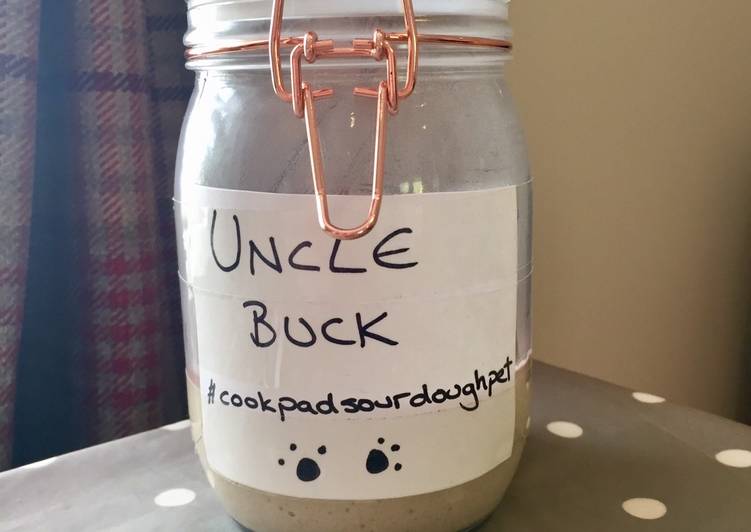
We hope you got insight from reading it, now let’s go back to buckwheat sourdough starter recipe. You can cook buckwheat sourdough starter using 3 ingredients and 6 steps. Here is how you achieve that.
The ingredients needed to make Buckwheat Sourdough Starter:
- Take 35 gm raisins
- You need 365 ml boiling water
- You need 385 gm buckwheat flour
Steps to make Buckwheat Sourdough Starter:
- DAY 1 - Soak the raisins in the boiling water, leave them to soak until the water has cooled until it is tepid (just above room temp is fine). Then strain the raisins out of the water.
- In a glass bowl or large jar (I used a large bowl), place 40g of buckwheat flour and 80mls of your tepid raisin water and mix to form a paste. Cover with cling film and leave in a warm spot for 24 hours. Reserve your raisin water for day 2.
- DAY 2 - Whisk in another 40 g of the buckwheat flour and 55mls of your raisin water (warm it very slightly if you can for max yeast growth oomph). Cover again and leave for 24 hours.
- DAY 3 - Whisk in a further 75g buckwheat flour and 115 ml of your raisin water. Cover and leave to ferment for a further 24 hours.
- DAY 4 - Hopefully today you will start to notice a mild vinegar like smell and you may see some large surface bubbles. Discard half your mixture (don't throw it out - you can make pancakes, crackers and even cookies with this discarded batter). Then whisk 75g buckwheat flour and 115 ml of raisin water to your starter. Cover and leave to ferment for 24 hours.
- DAY 5 - Whisk in your remaining 155g of flour and add 225 ml of regular tepid water. Cover loosely and set aside for 4 hours of until really bubbly. Then store in the fridge for a final 12 hours before using.
Discarded sourdough starter can be composted, fed to chickens, or used to make other sourdough goodies - like gluten-free sourdough crackers with herbs and cheese! Buckwheat and teff flours are great at catching a sourdough starter. This is why they are traditionally used for quick ferments like buckwheat crepes or injera. Soak the sunflower and pumpkin seeds in a separate dish, adding half a teaspoon of salt and enough water to cover the seeds by a few centimetres. Watch How To Make A Gluten Free Sourdough Starter And Get The Recipe.
If you find this Buckwheat Sourdough Starter recipe valuable please share it to your good friends or family, thank you and good luck.