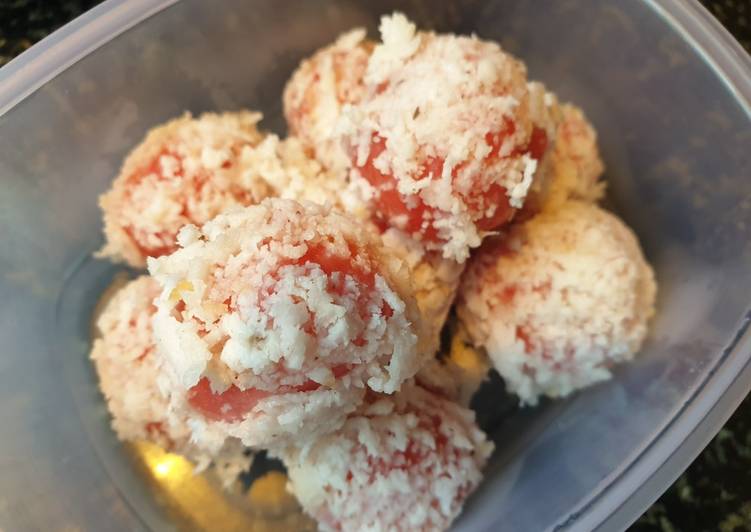
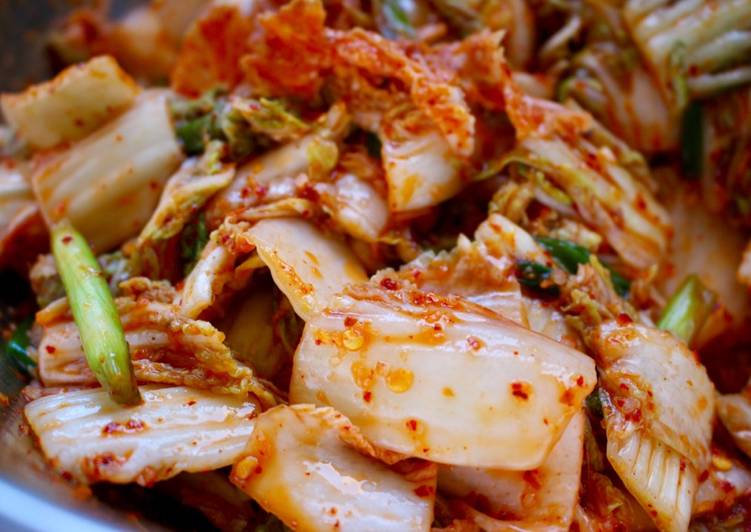
Hello everybody, welcome to my recipe site, If you're looking for recipes idea to cook today, look no further! We provide you only the best Kimchi (Easier than you think! ;) ) recipe here. We also have wide variety of recipes to try.
Before you jump to Kimchi (Easier than you think! ;) ) recipe, you may want to read this short interesting healthy tips about {Easy Ways to Get Healthy. Getting A Healthy Eater
After the weather outside warms up, the kitchen may be a terrible place to be. There are numerous things you can do however, when it comes to cooking a great home made meal which doesn’t require conventional stove top or oven cooking. Learn how to use some of those lower heat producing equipment in your own kitchen, such as the crock pot, in order to genuinely beat the summer heat and keep your cool while preparing a great warm meal for friends and family.
So, how does crock pot cooking really help overcome the heat? To put it simply, the crock pot in and of itself sets off much less heat compared to cooking than the oven or stove . Here is the very first and maybe the very best reason to use the crock pot on summer time meal preparation. You should also consider that by not heating the home by utilizing your stove top or oven you are also avoiding your air conditioning (or alternative heating systems ) from working overtime in order to compensate for the additional heat that other cooking systems pose.
This makes crock pot cooking a win-win situation since the costs involved in operating a crock marijuana are far less than the costs involved in operating a cooker or stove generally. Whether gas or electric, your stove and oven tend to be considerable energy hogs. Add to the fact that you are not raising the warmth in your house by traditional means of cooking and you are using less energy.
Unfortunately for most, the general consensus has been that crock pots were intended for comfort foods and hearty winter foods. The truth is that the crock pot should be one of the most loved and most frequently utilized cooking approaches in the event it is possible to handle it. In regards to cooking with a crock pot, the options are nearly limitless.
Advantages of Crock Pot Cooking
In addition to the cost advantages mentioned previously as it pertains to crock pot cooking there are quite a few other advantages that are well worth mentioning. First of all, the bulk of the work involved with crock pot cooking takes place early in the day when you are refreshed rather than at the conclusion of a frantic work or play day. This usually means that you are less likely to forget an ingredient or make other mistakes that often occur as we hurriedly prepare a dinner once we are exhausted in the actions of our day.
Second, many great crock pot recipes incorporate the vegetables that insure we’re getting the nutrients we need. So often, when preparing a meal at the last minute, vegetables and other side dishes are left out in favour of expedience. Crock pot cooking many cases is really a meal in one dish.
Unlike vegetables and pans, many crock pot foods are made in one dish. This usually means that there isn’t going to be mountains of dishes to be either hand cleaned or packed to the dishwasher (or if you are like me-both) afterwards. It’s possible to spend less time cleaning only as you spent time slaving over a hot cooker. Oh wait! Make that no time slaving over a hot stove. After tidy is complete you can contact enjoying the sunshine set, chasing the lightening bugs with your little ones, or even waiting for your first celebrity.
While there’ll be no 1 size fits all very ideal cooking procedure, crock pot cooking comes really near. In case you have a crock pot gathering dust somewhere in the rear of your pantry it’s the right time to get it out, dust offand dig some wonderful summer crock pot cooking recipes.
We hope you got benefit from reading it, now let’s go back to kimchi (easier than you think! ;) ) recipe. To cook kimchi (easier than you think! ;) ) you need 11 ingredients and 9 steps. Here is how you do that.
The ingredients needed to make Kimchi (Easier than you think! ;) ):
- Take 4-5 pounds Napa cabbage, cut into roughly 1"x 2" pieces (about 30 cups of chopped raw cabbage)
- Use 1 bunch green onions, washed, roots trimmed, and cut into 2 inch segments
- Provide 5 Tablespoons kosher salt (about 10% less if you're using regular table salt)
- Take For the paste:
- Use 1/4 cup minced garlic (about 5 or 6 large cloves)
- Take 1/4 cup minced fresh ginger root (about a 2" segment, peeled)
- Take 1/4-1/2 cup crushed red chili flakes depending on how hot you want your kimchi. See notes above re: gochugaru
- Get 1/4 cup steamed white rice, lightly packed. Short or long grain is fine. If stale, microwave with 2 Tbsp. water for 1 minute
- You need 1/4 cup fish sauce
- Use 1/4 cup sugar
- Use 1/4 cup water for blending + 1/3 cup water for rinsing seasoning from bowl (see directions below)
Instructions to make Kimchi (Easier than you think! ;) ):
- In a large stainless steel or mixing bowl, toss the raw cabbage, green onion, and the salt together to pre-brine the cabbage. Make sure to thoroughly incorporate the salt throughout the cabbage. In 10 to 15 minutes, you should start to see the cabbage leach liquid and wilt. Let the cabbage sit for 1.5 to 2 hours, tossing and redistributing every 30 minutes to ensure even brining.
- After at least 90 minutes of pre-brining, rinse the cabbage with enough water to cover the cabbage by 4 or 5 inches by swishing the cabbage in the water 7 or 8 times. Remove the cabbage into a strainer and let the excess water drain while you prepare the paste.
- Make the paste by putting all the paste ingredients into a blender and blend until you can't see the individual grains of rice. Pour the paste over the cabbage.
- Get into the bowl with your hands and mix the paste into the cabbage until all the pieces are evenly and thoroughly coated.
- Pack your kimchi into a clean, dry bottle or other tight-lidded container (this time I repurposed a half gallon kimchi jar) and use the last 1/3 cup of water to swish around the mixing bowl, pick up all the remaining paste, and pour that liquid on top of your kimchi. Remember to leave 2 to 3 inches of headspace at the top to allow for expansion as fermentation takes place.
- Your batch of kimchi is now ready for fermentation in a dark but not cold place like the inside of your cupboard. Or, if you can find a warmish spot in your garage, you can put it there. (I know that's not always possible for cold climate people in the middle of winter.) As it ripens, it's a good idea keep the lid slightly unscrewed to relieve the pressurization caused by fermentation. (Your jar can literally explode from the pressure on a specially active fermentation day.)
- People often ask HOW RIPE DOES THE KIMCHI HAVE TO BE BEFORE I REFRIGERATE OR EAT IT? You can eat the kimchi whenever you want. Fresh, just after it's been made, all the way up to when it's so incredibly old, ripe and stinky you could choke out a subway system by placing an open jar in one of the vents. It remains safe for human consumption for A VERY LONG TIME.
- But as to when to refrigerate, just go out once a day every day to taste a piece, and when it gets to the ripeness you like, stick it in the fridge. It'll continue to ripen, but very slowly.
- Enjoy! :)
It is easier than you think! When you use easierthanyouthink.ca, you can connect to your course and specific lesson and review and practice at your own pace. You can watch video lessons, review past exams or practice on randomly generated problems based on the curriculum. Bacteria and other microbes (including fungi and viruses) are often thought of as sources of disease Fermented foods include sauerkraut, kimchi, miso, kombucha and many pickles. Many people claim they find sourdough easier to digest than other bread, but it is likely that the lengthy.
If you find this Kimchi (Easier than you think! ;) ) recipe valuable please share it to your good friends or family, thank you and good luck.